5 minutes
What 63,000 shoppers just told us about paying
How your customers want to pay – and what that means for your business.
Key points
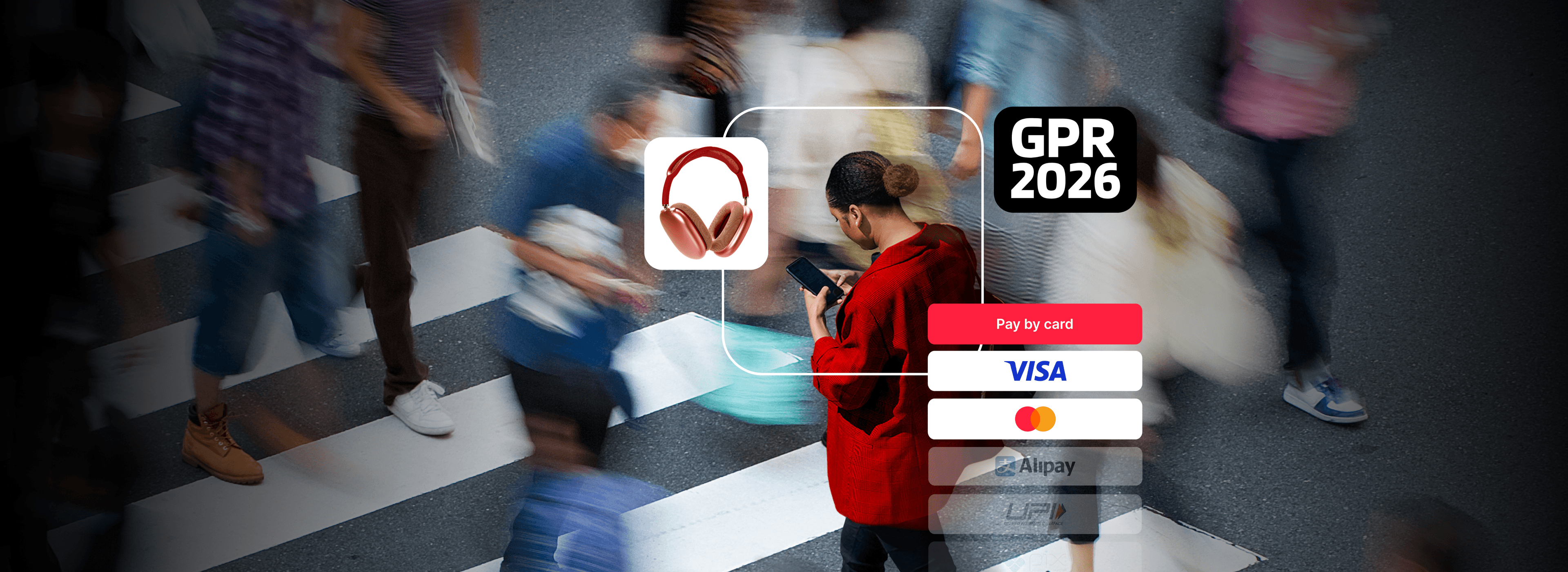
- Digital wallets (Apple Pay, Google Pay, PayPal) account for 56% of global e-commerce transaction value and 33% of in-store spending, per the 2026 Global Payments Report (GPR) from Worldpay, now part of Global Payments, which is based on 63,000+ consumers across 42 markets.
- In the UK, digital wallets already represent 40% of e-commerce value and are forecast to reach 50% by 2030. More than half of UK adults now use a digital wallets.
- Cards remain dominant: Direct card use accounted for 46% of UK online and 69% of point-of-sale (POS) spending in 2025.
- BNPL accounts for 8% of UK e-commerce value in 2025, with Klarna, PayPal Pay Later and Clearpay well-established with UK shoppers.
- The practical question for UK businesses isn't whether to accept new payment methods – it's whether their payment setup already supports the options their customers are actively using.
Every year, Worldpay, now part of Global Payments, publishes the Global Payments Report (GPR) – the payments industry's most comprehensive look at how consumers pay across 42 markets, with more than 63,000 consumers surveyed. The 2026 edition carries a message that every small and medium-sized business in the UK should hear: Payments are changing faster than most businesses realize, and the gap between what customers expect and what some businesses offer is quietly widening.
Here's what the data says, and what it means for you.
What payment methods do customers prefer now?
Globally, digital wallets – think Apple Pay, Google Pay and PayPal – now account for 56% of e-commerce transaction value and 33% of in-store spending. That's not a trend. That's the new baseline.
But ‘digital wallet’ isn't one thing. The wallet on your customer's phone is a container. Inside it might be a credit card, a debit card, a buy now, pay later option or a direct bank transfer – sometimes all of the above. When a customer taps to pay, they're not just choosing a payment method. They're choosing the whole experience: fast, secure and invisible.
For small businesses, the implication is practical: Accepting digital wallets isn't optional anymore.
Are cards still relevant for small businesses in the UK?
Yes – emphatically. Cards aren't going anywhere. In the UK, direct card use accounted for 46% of online and 69% of point-of-sale spending in 2025. British consumers' preference for cards runs deep – and it increasingly plays out through contactless technology. In 2024, contactless accounted for 95% of all card transactions under £100. In March 2026, that £100 limit was lifted entirely, removing one of the last remaining friction points in everyday card use.
The shift worth watching is where those cards are being used. Cards are the leading funding method for digital wallets, with debit preferred over credit. As usage is strong within wallets like Apple Pay, Google Wallet and Paypal, card dominance is increasingly playing out within these ecosystems alongside the continued strength of direct card use.
What's happening with payments in the UK right now?
The UK is one of the most card-mature markets in the GPR – and one of the most actively shifting.
Digital wallets are forecast for double-digit growth, both online and in-store in the UK. They already account for 40% of e-commerce value and are forecast to reach 50% by 2030. More than half of UK adults now use a digital wallet, according to UK Payment Markets 2025, with PayPal, Apple Pay and Google Pay leading the way online.
'Digital wallets are forecast for double-digit growth, both online and in-store in the UK.'
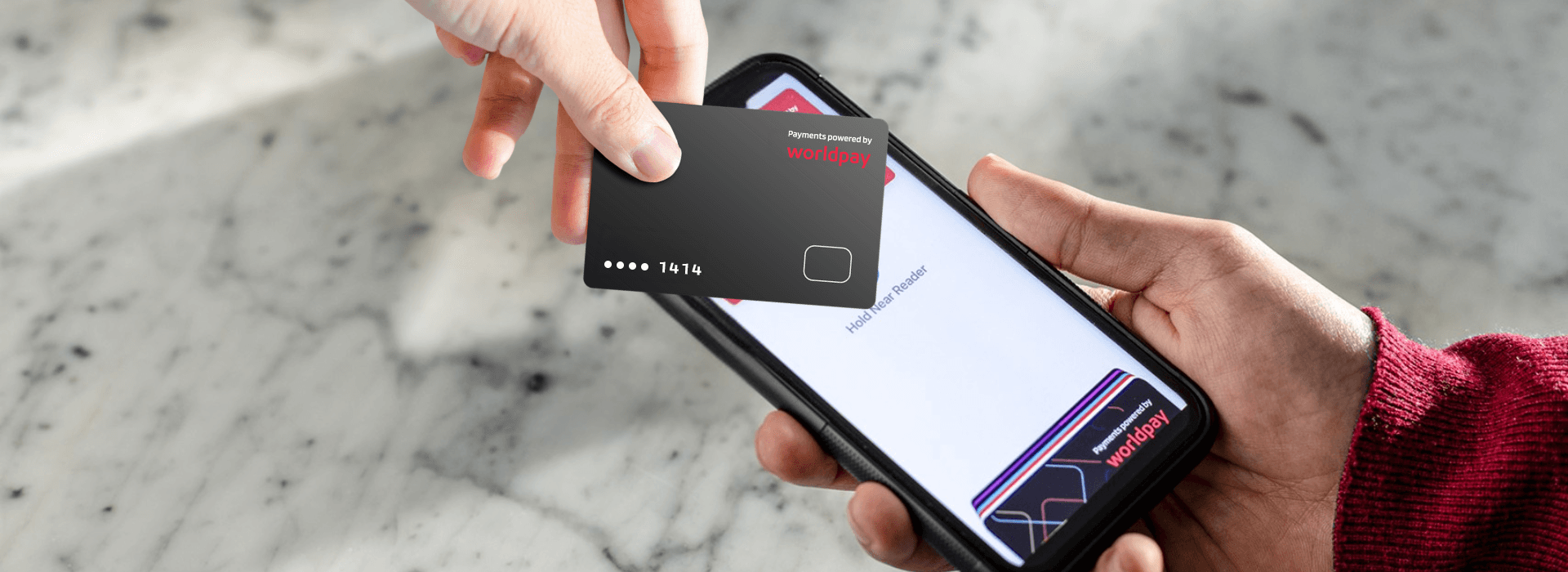
In stores, wallet adoption is accelerating. PayPal announced an expansion to physical retail in November 2025. The infrastructure for tap-to-pay is already near-universal across the UK. The customer behaviour is following. For any business that still treats in-store payments as purely card transactions, the expectation gap is closing – and closing quickly.
Buy now, pay later is also a meaningful part of the UK payment mix, accounting for 8% of e-commerce value in 2025. Klarna, PayPal's Pay Later and Clearpay are well-established with UK shoppers. In addition, BNPL is becoming more embedded – inside wallets, inside card-backed installment plans, inside the checkout flow itself.
Is buy now, pay later worth offering to customers?
Increasingly, yes. Globally, BNPL has grown from $2.3 billion in transaction value in 2014 to an estimated $300 billion in 2025 – a 130-fold increase. Global growth is forecast to continue at 11% annually through 2030. The category is maturing: Leading brands like Klarna are evolving into full digital banks, issuing cards and offering savings products alongside installments.
For businesses of all sizes, the practical question isn't ‘should I add a BNPL provider?’ but rather ‘does my payment setup support the installment options my customers are already using?’ Merchants who offer flexible payment options convert more sales. Customers who might hesitate at a full price point often complete the purchase when installments are available – and they're more likely to return.
What does frictionless payment actually mean for your business?
The most important finding in GPR 2026 isn't a specific number. It's a direction.
Across every market studied, consumer expectations are converging around the same thing: Payments should feel effortless. The complexity – the card networks, the instant payment rails, the wallet integrations – should be invisible to the customer. They should tap, click or scan, and it should just work.
'Across every market studied, consumer expectations are converging around the same thing: Payments should feel effortless.'
For large enterprises with dedicated payment operations teams, achieving that is a significant investment. For smaller businesses, it means choosing the right payment partner – one who handles that complexity on your behalf, so you don't have to.
That's what Worldpay is built for. Whether your customers are paying in your shop, on your website or through an app, the right infrastructure ensures every payment method your customer prefers is one you can accept – reliably, securely and without friction.
In a market moving as fast as payments, the businesses that grow are the ones who never lose a sale at the moment a customer is ready to buy.
Download the GPR 2026 for an in-depth look at how consumers pay across the world.
Related insights